
DESCRIPTION
CABOUN (CABON, CAPOUN, CAPON)
Brittany
France
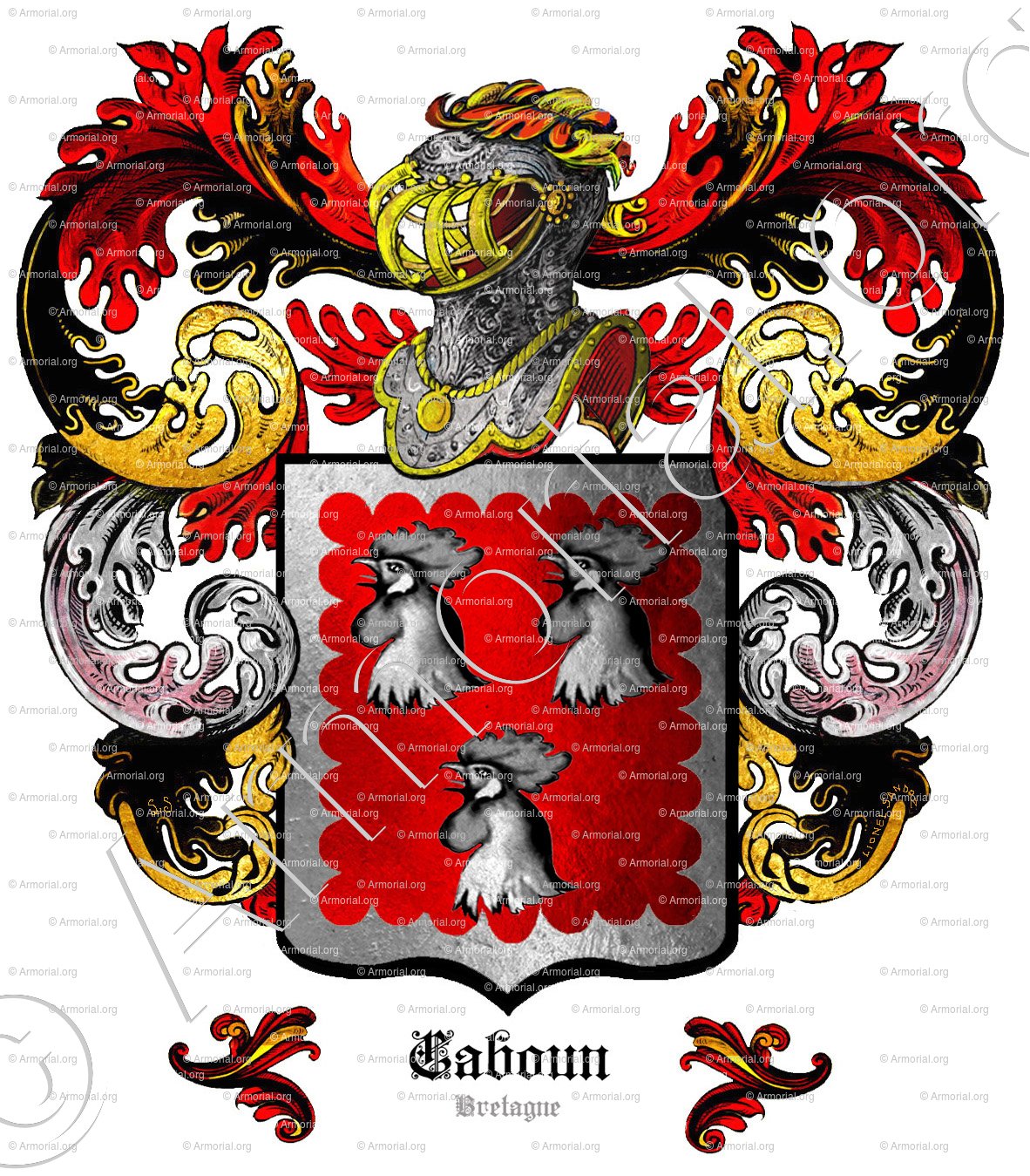
Coat of Arms:
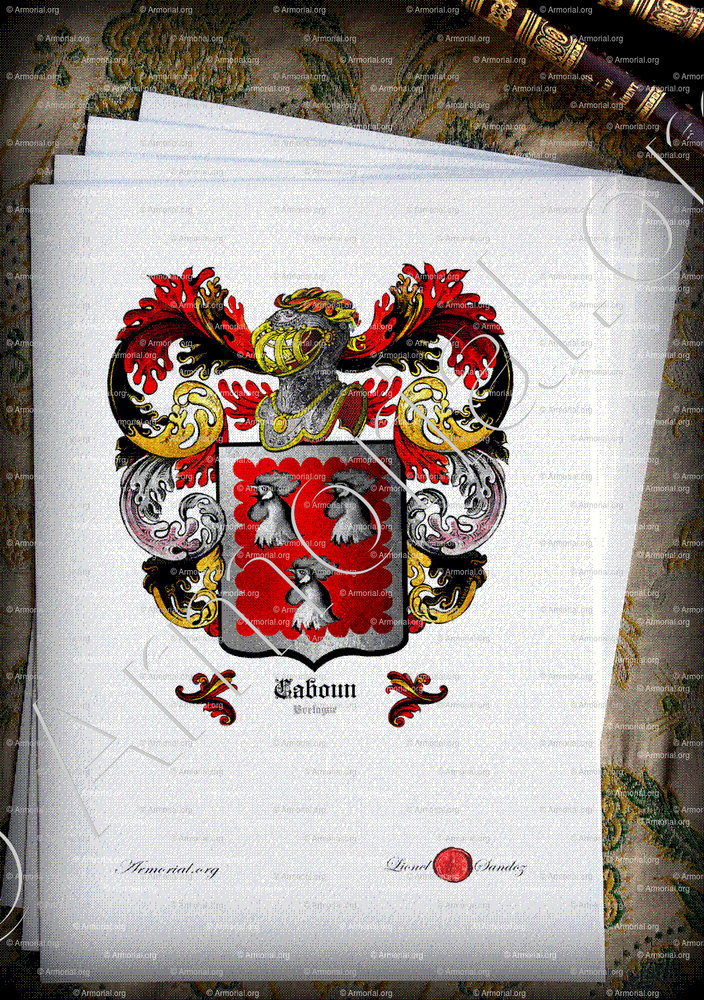
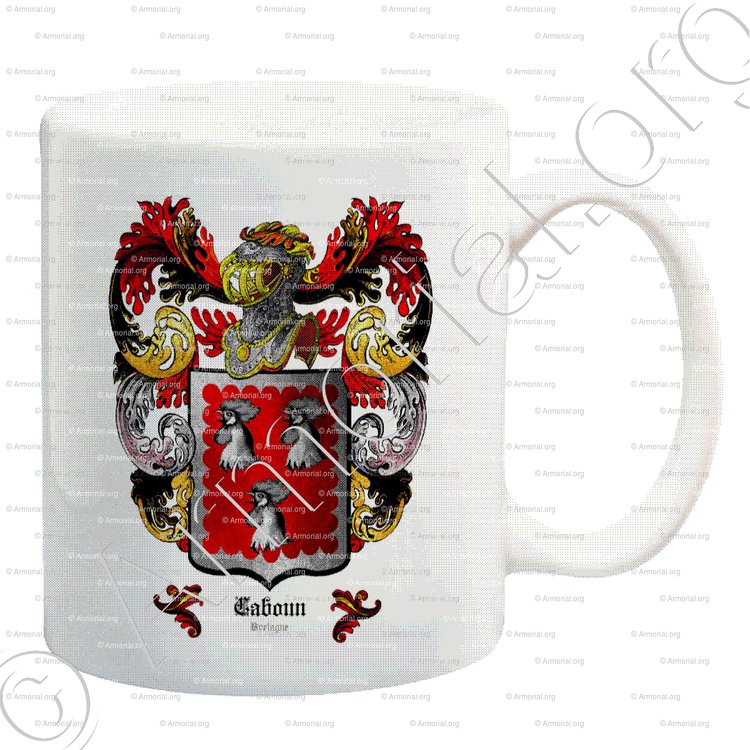
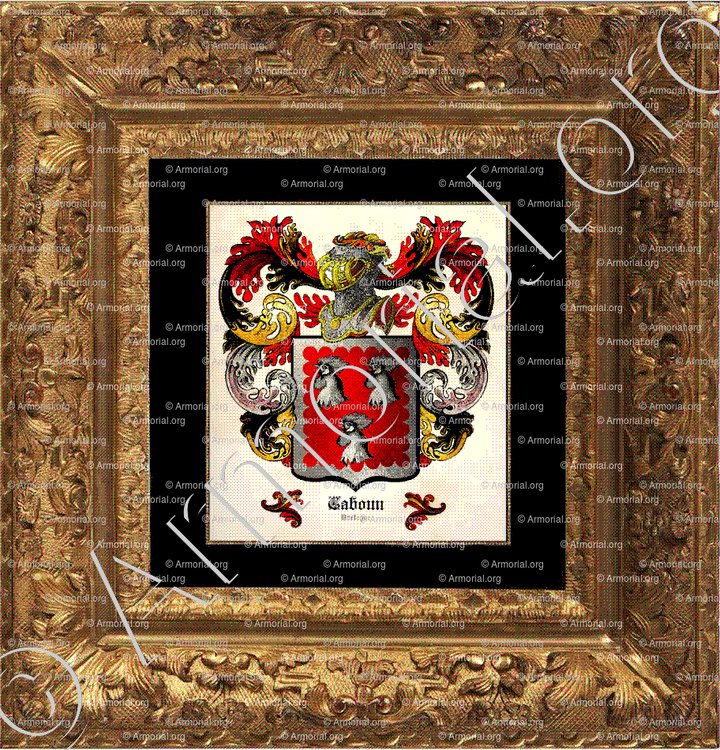
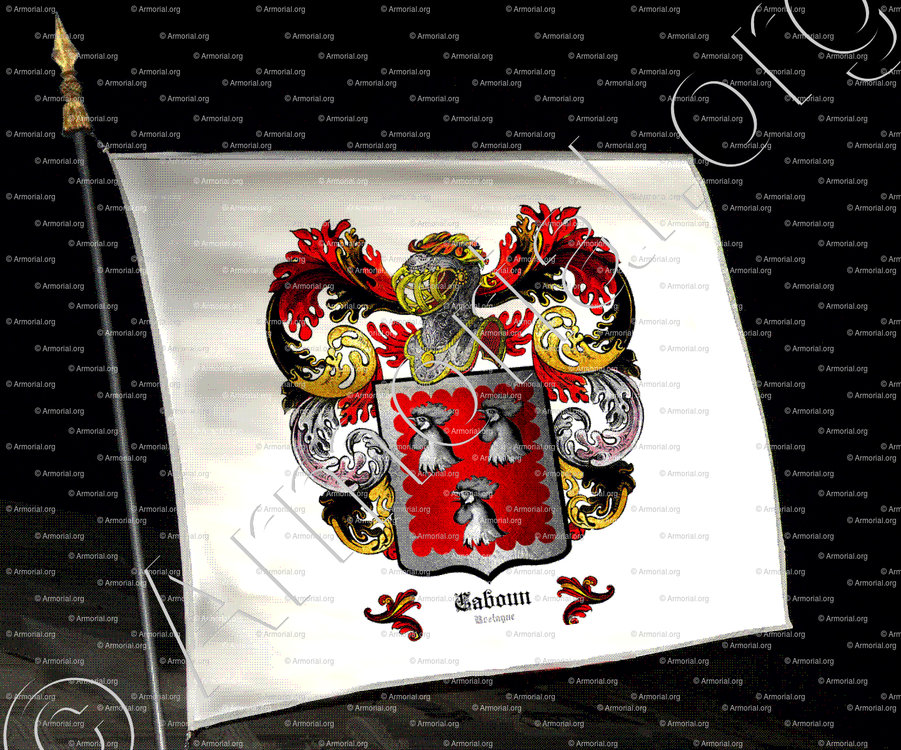
"Argent, three capon heads erased gules."
Other Blazon:
"Gules, a cock or capon argent."
Heraldic Sources:
Nobiliaire et armorial de Bretagne by Pol Potier de Courcy, 1862.
Armorial général d’Europe by J.B. Rietstap (Gouda, 1861).
Armorial d'Europe by J.B. Rietstap (Gouda, 1884, Berlin, 1934; Gouda, 1887, Berlin, 1937).
Armorial général by J.B. Rietstap, illustrated by Victor and Henri Rolland (1903-1926). Colored by Lionel Sandoz (1993-2002).
Le Grand Armorial de France by Jougla de Morénas (1935-1943), de Warren, Frantzen (1960).
Heraldic Archives: The Powell’s Roll (1348 or late 1347):
Sir Robert Capoun [of] Yorkshire
"3 cocks and border engrailed or."
Robert Capon, d. ca. 1346, knight, son of Cutbert (fl. 1284-1302), held Upleatham (Yorkshire), served as commissioner of array in Yorkshire. (Cabon, Capoun, Capon) The Powell’s Roll (1348 or late 1347).
Notice: CABOUN (CABON, CAPOUN, CAPON)
1. Heraldry and Symbolism of the Arms
Main Blazon (Brittany): Argent, three capon heads erased gules.
Description: This blazon, recorded in the Nobiliaire et armorial de Bretagne by Pol Potier de Courcy (1862) and the Armorial général d’Europe by J.B. Rietstap (1861, 1884, 1887, 1934, 1937), features a silver field (argent, symbolizing purity and sincerity) adorned with three capon heads erased in red (gules, evoking courage and sacrifice). The capon heads, representing a domestic animal, may symbolize vigilance, agriculture, or fertility, values often associated with rural or noble families in Brittany. The erased heads (torn off, without bodies) suggest a stylized representation, typical of Breton heraldry, emphasizing simplicity and strength.
Associated Location: Manoir de Kergunic, Kernoues, Finistère, France.
Variant: Gules, a cock or capon argent.
Description: This blazon, also noted by Rietstap, reverses the colors with a red field (gules) and a white cock or capon (argent). The cock, a symbol of vigilance and courage, is a common heraldic emblem, often linked to nobility or families with local responsibilities (administration, defense).
English Blazon (Yorkshire): Gules, three capons within a border engrailed argent.
Description: Documented in The Powell’s Roll (1347-1348) and dated January 2, 1693, this blazon is attributed to Sir Robert Capoun of Yorkshire. The engrailed border (notched) adds distinction, often used to mark a cadet branch or alliance. The three capons reiterate the theme of vigilance, while the engrailed border may symbolize protection or heraldic differentiation.
Symbolism
Capon/Cock: In heraldry, the capon (castrated cock) or cock symbolizes vigilance (as it heralds the dawn), courage, and sometimes fertility or agricultural prosperity. Its presence in the Caboun/Cabon/Capon arms suggests a connection to rural values or a land-based identity.
Colors:
Argent: Purity, clarity, honesty.
Gules: Courage, sacrifice, strength.
Engrailed Border (Yorkshire): This notched border may indicate a cadet branch or an honorific distinction, often used to differentiate from a main lineage.
Heraldic Sources:
The Powell’s Roll (1347-1348, Sir Robert Capoun).
Nobiliaire et armorial de Bretagne (Pol Potier de Courcy, 1862).
Armorial général d’Europe (J.B. Rietstap, 1861, 1884, 1887, 1934, 1937).
Armorial général illustrated by Victor and Henri Rolland (1903-1926), colored by Lionel Sandoz (1993-2002).
Le Grand Armorial de France (Jougla de Morénas, 1935-1943; Warren, Frantzen, 1960).
Origin and Etymology
Etymology: The name Caboun (and its variants Cabon, Capoun, Capon) derives from the Breton term caboun, meaning "capon" (castrated cock), as noted in the Dictionnaire français-celtique by Grégoire de Rostrenen. This term, used in Lower Brittany, reflects a Celtic origin tied to agriculture or animal husbandry. Derivatives like cabónica (small capon) or caboun roftet (roasted capon) reinforce this linguistic connection. The name may have been adopted as a nickname or toponym, designating a family associated with animal husbandry or a local characteristic.
Geographic Origin:
Brittany (France): The name is strongly rooted in Finistère (Tréogat, Sibiril, Plougar), with frequent mentions in 17th- and 18th-century genealogical records.
England (Yorkshire, Lincolnshire): The presence of the name Caboun or Capon in Yorkshire (Sir Robert Capoun, 14th century) and in Bradley Haverstoe Wapentake (Lincolnshire, 1771) suggests an early dispersion, possibly linked to Norman migrations or medieval exchanges between Brittany and England.
Other Regions: An isolated mention of Caboun JAN (cabounaux) in Graz, Austria, indicates a possible later diffusion of the name, though this may be a coincidence or a distinct branch.
Historical Context
Brittany (17th-18th centuries): The name Cabon or Le Cabon is well-documented in Finistère, notably in Tréogat, Sibiril, and Plougar. Genealogical records show a locally established family with marriages and alliances in Breton parishes. The Manoir de Kergunic (Kernoues, Finistère) is associated with the arms of argent with three capon heads erased gules, suggesting a family of minor nobility or landowners.
England (14th century): Sir Robert Capoun (or Capon), d. ca. 1346, was a knight from Yorkshire, son of Cutbert (fl. 1284-1302). He held lands in Upleatham and served as a commissioner of array (responsible for military recruitment). His blazon (gules, three capons within a border engrailed argent) is recorded in The Powell’s Roll (1347-1348), indicating a notable social position.
Bradley Haverstoe Wapentake (Lincolnshire, 1771): The name Caboun appears in a list of parishes, suggesting an early presence in this region, possibly tied to land ownership or local administration.
Notable Figures (Chronologically)
Cutbert Capoun (1284-1302): Father of Sir Robert Capoun, active in Yorkshire, likely a landowner or local administrator.
Sir Robert Capoun (d. ca. 1346): Knight of Yorkshire, held lands in Upleatham, served as commissioner of array. His blazon is documented in The Powell’s Roll.
Henri Caboun (1610-1624): Mentioned in a Breton genealogy, married to Marie Balouin.
Jean Caboun (1616-1676): Husband of Marguerite Ronarch, recorded in Tréogat (Finistère). Father of several children, including Jeanne, Pierre, Marguerite, Claudine, Anne, Hélène, Marie, Yves, and Pascal Le Cabon.
Jeanne Cabon (1641-1711): Daughter of Jean and Marguerite Ronarch, married to Claude Birien (1643-1711).
Marguerite Cabon (1645-1711): Daughter of Jean, married to Noël le Jeune Larzul (1639-1686).
Yves Le Cabon (1654-1706): Son of Jean, married to Marie Kerfridin (d. 1722).
Other Mentions (Sibiril, 1642-1730): Several individuals named Caboun appear in Sibiril (Finistère) records, often dying young (1642-1647), indicating high infant mortality in this branch.
War Memorials
No explicit mention of war memorials dedicated to the Caboun, Cabon, Capoun, or Capon families is available in the provided sources. However, given the name’s presence in Breton parishes like Tréogat, Sibiril, and Plougar, it is possible that family members are listed on local war memorials, particularly for 20th-century conflicts (World War I and II). Research in Finistère municipal archives or databases like MémorialGenWeb could reveal associated names.
Iconography
Coats of Arms: The described arms (argent with three capon heads erased gules and gules with a cock or capon argent for Brittany; gules with three capons within a border engrailed argent for Yorkshire) are the primary iconographic representations. These blazons, illustrated by Victor and Henri Rolland (1903-1926) and colored by Lionel Sandoz (1993-2002), are associated with the Manoir de Kergunic (Kernoues, Finistère) for the Breton branch.
Manoir de Kergunic: This site in Kernoues (Finistère) is a key element of the family’s iconography, serving as an anchor for the Breton arms.
Other Elements: No specific iconographic representations (engravings, statues, stained glass) are mentioned in the sources, but the recurring capon/cock motif suggests a strong visual identity tied to this animal.
✶ Copyright: Lionel Sandoz, author of the armorial drawing and text, 2025.
SHARE ON SOCIAL NETWORKS
OPINIONS
5 étoiles sur 5. Sur un total de 1 note.
GIVE A NOTE
| Posted by Jan C at 07/04/2025 à 01:26
1 Internet user found this comment useful.
Did you find this comment useful? You found this comment useful.